Acne vulgaris is the most common skin disease worldwide, affecting approximately 85% of people at some point in their lives, with peak prevalence during adolescence. While often considered a “teenage” condition, it affects many adults (especially women in their 20s–40s) and can cause significant psychological distress, scarring, and reduced quality of life.
Modern acne treatment is highly effective when approached systematically, using a combination of topical therapies, systemic agents, procedural treatments, and lifestyle modifications. The goal is to target the four main pathogenic factors:
- Increased sebum production
- Abnormal follicular keratinization (clogged pores)
- Cutibacterium acnes (C. acnes) proliferation
- Inflammation
Acne Severity Classification (Practical Clinical Approach)
| Severity | Description | Typical Lesions | First-Line Treatment Approach |
|---|---|---|---|
| Comedonal | Mostly blackheads & whiteheads (non-inflammatory) | Open & closed comedones | Topical retinoids ± benzoyl peroxide ± salicylic acid |
| Mild–moderate inflammatory | Papules, pustules, few-to-moderate nodules | <50 inflammatory lesions, no significant scarring | Topical retinoid + BPO ± topical antibiotic/clindamycin |
| Moderate–severe inflammatory | Many papules/pustules, several nodules, early scarring | 50+ inflammatory lesions, nodules present | Oral antibiotic + topical retinoid + BPO (or topical dapsone) |
| Severe / Nodulocystic | Numerous nodules, cysts, abscesses, significant scarring | Many nodules/cysts, extensive inflammation | Oral isotretinoin (usually first-line) |
| Adult female acne | Often hormonal pattern (lower face, jawline), persistent beyond 25 | Mixed comedonal + inflammatory, premenstrual flares | Spironolactone ± OCP + topical retinoid/BPO |
Current First-Line Treatments (2025 Guidelines – AAD, EADV, Global Consensus)
1. Topical Treatments (Foundation of Almost All Regimens)
| Agent | Mechanism | Strength / Concentration | Frequency | Main Indications | Common Side Effects | Pregnancy Category |
|---|---|---|---|---|---|---|
| Adapalene | Retinoid (3rd generation) | 0.1% & 0.3% cream/gel | Nightly | Comedonal + inflammatory | Irritation, dryness, photosensitivity | C (use with caution) |
| Tretinoin | Retinoid (first generation) | 0.025–0.1% cream/gel/micro | Nightly | All types, especially comedonal | High irritation | C |
| Trifarotene | 4th-generation retinoid (selective RAR-γ) | 0.005% cream | Nightly | Trunk acne, less irritation | Mild–moderate irritation | Not established |
| Benzoyl Peroxide (BPO) | Bactericidal + keratolytic | 2.5–10% (most use 2.5–5%) | Once–twice daily | Inflammatory acne, prevents resistance | Irritation, bleaching of fabrics | C |
| Clindamycin 1% + BPO 2.5–5% | Antibiotic + bactericidal | Fixed combination | Once–twice daily | Inflammatory acne | Irritation, rare pseudomembranous colitis | B |
| Topical Minocycline Foam | Tetracycline antibiotic | 4% foam | Once daily | Inflammatory acne | Minimal systemic absorption | D |
| Topical Dapsone 5–7.5% | Anti-inflammatory + antibacterial | Gel | Twice daily | Inflammatory, especially adult females | Rare methemoglobinemia | C |
| Azelaic Acid 15–20% | Keratolytic, antibacterial, anti-inflammatory | Gel/cream | Twice daily | Mild–moderate, rosacea overlap, pregnancy | Mild stinging | B |
| Clascoterone 1% | Topical androgen receptor inhibitor | Cream | Twice daily | Moderate acne, hormonal pattern | Mild local irritation | Not established |
| Topical Ivermectin 1% | Anti-inflammatory + anti-Demodex | Cream | Once daily | Inflammatory acne + rosacea | Mild irritation | Not established |
2. Oral Systemic Treatments
| Agent | Class / Mechanism | Typical Dose | Duration | Main Indications | Major Monitoring / Side Effects |
|---|---|---|---|---|---|
| Doxycycline / Minocycline | Tetracycline | 40–100 mg daily | 3–6 months | Moderate–severe inflammatory acne | Photosensitivity, GI upset, rare autoimmune reactions |
| Sarecycline | Narrow-spectrum tetracycline | Weight-based (60–150 mg) | 3–6 months | Moderate–severe, fewer side effects | Better GI tolerance than older tetracyclines |
| Isotretinoin (Accutane) | Retinoid (systemic) | 0.5–1 mg/kg/day (cumulative 120–150 mg/kg) | 5–8 months | Severe, nodulocystic, scarring, treatment-resistant | Teratogenic, requires iPLEDGE, lipids/liver monitoring |
| Spironolactone | Anti-androgen | 50–200 mg daily (usually 100 mg) | Long-term | Adult female hormonal acne (jawline, chin) | Menstrual irregularity, hyperkalemia, breast tenderness |
| Combined Oral Contraceptives | Estrogen + progestin (anti-androgenic) | FDA-approved: Yaz, Ortho Tri-Cyclen, Estrostep | Long-term | Hormonal acne in females | VTE risk, not for smokers >35 years |
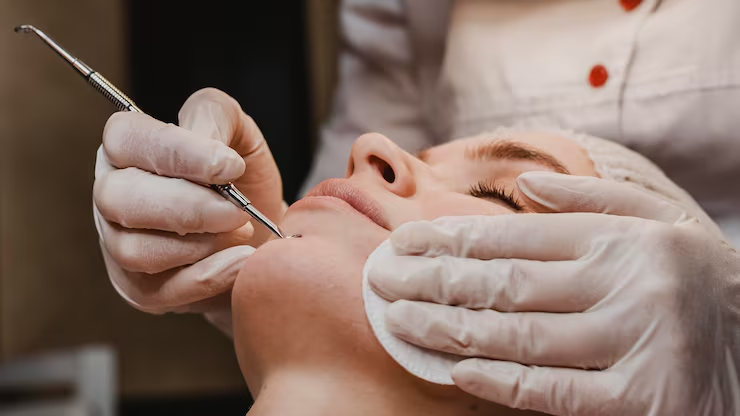
3. Procedural & Energy-Based Treatments (Adjunctive)
- Chemical peels (salicylic, glycolic, Jessner’s)
- Laser/light therapies (blue light, red light, 1450 nm diode, 1726 nm Aviclear)
- Intralesional corticosteroids — for large inflammatory nodules
- Microneedling with PRP — for post-acne scarring
- Photodynamic therapy — ALA + light (moderate evidence)
Acne Treatment Algorithm (Practical 2025 Approach)
- Mild comedonal acne → Start with adapalene 0.1–0.3% + benzoyl peroxide 2.5–5% nightly
- Mild–moderate inflammatory → Adapalene/BPO fixed combination OR tretinoin + clindamycin/BPO → Consider azelaic acid if irritation occurs
- Moderate–severe inflammatory → Oral doxycycline/minocycline/sarecycline (3–6 months) + topical retinoid + BPO → In females: consider spironolactone 50–150 mg ± OCP
- Severe, nodulocystic, scarring, or treatment-resistant → Oral isotretinoin (first-line in most guidelines) → Cumulative dose 120–150 mg/kg usually sufficient
- Adult female hormonal pattern → Spironolactone ± OCP + topical retinoid ± topical dapsone/clascoterone
- Persistent post-adolescent acne → Rule out endocrine disorders (PCOS, hyperandrogenism) → Consider spironolactone, isotretinoin, or anti-androgen therapy
Emerging & Investigational Treatments (2025)
- Topical IDP-126 (clindamycin + BPO + adapalene triple combination) — recently approved
- Topical minocycline foam 4% — excellent for inflammatory lesions
- Clascoterone 1% (Winlevi) — first new mechanism in decades
- Spironolactone topical cream (phase III trials)
- Microbiome-modulating therapies (probiotic topicals, phage therapy)
- Light-based therapies (1726 nm diode laser – FDA cleared for moderate-severe acne)
- Oral anti-androgens (new generation, better selectivity)
Conclusion & Key Takeaways
Acne treatment in 2025 is highly effective when following evidence-based guidelines. Most patients can achieve excellent clearance with a combination of:
- Topical retinoid + benzoyl peroxide (foundation)
- Oral antibiotics or spironolactone for moderate–severe cases
- Isotretinoin for severe, scarring, or resistant disease
Early aggressive treatment prevents scarring. Maintenance therapy (usually topical retinoid ± BPO) is essential to prevent relapse. Patient education about realistic expectations, adherence, and irritation management is critical.
With the right regimen, the vast majority of patients with acne can achieve clear or almost clear skin and prevent long-term sequelae. Consult a dermatologist for personalized treatment, especially if scarring, severe nodulocystic acne, or hormonal factors are present.