Gardasil: Insights Into Its Impact on Public Health
Gardasil, developed by Merck & Co., is a family of human papillomavirus (HPV) vaccines designed to prevent infections from high-risk HPV strains that cause cancers and low-risk strains responsible for genital warts. The original Gardasil (quadrivalent) was approved in 2006, followed by Gardasil 9 (nonavalent) in 2014, which targets nine HPV types and has been the only HPV vaccine available in the U.S. since 2017.
These vaccines use virus-like particles (VLPs) to stimulate an immune response without causing infection. By December 2025, over 270 million doses of Gardasil vaccines have been distributed globally, significantly reducing HPV-related diseases. This article covers the history, types, mechanism, efficacy, dosing, safety, recommendations, and recent developments.
What Is Gardasil?
Gardasil vaccines are recombinant, non-infectious vaccines that protect against specific HPV types. HPV is the most common sexually transmitted infection, with over 200 strains; about 14 are high-risk for cancer, and two cause most genital warts.
- Gardasil (Quadrivalent): Targets HPV 6, 11 (low-risk, warts), 16, 18 (high-risk, ~70% of cervical cancers). Approved for ages 9-26 initially; expanded to 45 in some regions.
- Gardasil 9 (Nonavalent): Covers the four above plus 31, 33, 45, 52, 58 (additional ~20% of cervical cancers), preventing ~90% of HPV-related cancers. Approved for ages 9-45 in females and 9-26 in males in the U.S., with expansions abroad.
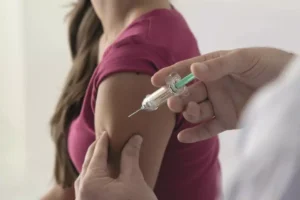
Gardasil 9 is administered as an intramuscular injection and does not treat existing infections or guarantee 100% protection.
History of Gardasil
HPV vaccine development began in the 1990s, building on research into VLPs by scientists like Ian Frazer. Merck’s quadrivalent Gardasil was the first FDA-approved HPV vaccine in June 2006 for females 9-26, based on trials showing 100% efficacy against vaccine-type infections in HPV-naïve individuals.
- Key Milestones:
- 2009: Approved for males 9-26 for warts prevention.
- 2010: Expanded to prevent anal cancer in both sexes.
- 2014: FDA approves Gardasil 9 after trials in 14,000+ participants, showing 96.7% efficacy against cervical precancers.
- 2018: U.S. approval up to age 45 for females; 2020 for males.
- Global: Approved in 120+ countries by 2011; WHO prequalification in 2009.
By 2025, real-world data shows near-elimination of vaccine-type HPV in vaccinated populations, with cervical precancer rates dropping 80-90% in young women.
Mechanism of Action
Gardasil uses L1 capsid proteins from HPV to form empty VLPs, mimicking the virus to trigger antibody production without DNA or infection risk. Adjuvants (aluminum hydroxyphosphate sulfate in Gardasil) enhance immune response.
- Pharmacokinetics: Antibodies peak 1-2 months post-vaccination, persisting 10+ years. Protection via neutralizing antibodies blocking HPV entry into cells.
- Duration: Seropositivity ≥99% for HPV-16/18 at 10 years; 93-98% at 5 years post-single dose in adolescents.
It prevents persistent infection, precancers, and warts but requires screening for non-vaccine types.
Efficacy and Clinical Evidence
Gardasil 9’s efficacy was proven in Phase 3 trials like V503-001 (14,215 females 16-26): 96.3% against high-grade cervical lesions from nine types; 98.9% against warts.
- Key Trials:
- FUTURE II (Gardasil): 100% efficacy against CIN2+ from HPV 16/18.
- V503-002 (males): 90.4% against anal intraepithelial neoplasia.
- Long-Term: 10-year follow-up shows sustained protection; single-dose trials (e.g., Tanzanian girls) confirm ≥99% seropositivity at 5 years.
Real-world: 80% reduction in cervical cancer risk; 88% in persistent infections for adults 27-45. Efficacy wanes slightly over time but remains >90% for targeted types.
Benefits and Risks
Benefits:
- Prevents ~90% of HPV-related cancers (cervical, anal, oropharyngeal, etc.) and 90% of genital warts.
- Gender-neutral: Reduces transmission; protects males from anal/oropharyngeal cancers.
- Long-term: Herd immunity effects; safe in pregnancy if inadvertently given (no intervention needed).
- Public Health: Potential to eliminate cervical cancer by 2030-2040 in high-vaccination areas.
Risks and Side Effects:
- Common (10-40%): Injection-site pain/swelling/redness, headache, fever, fatigue, nausea.
- Serious (rare, <0.01%): Anaphylaxis, fainting (syncope—sit/lie for 15 min post-vaccination).
- No link to infertility, Guillain-Barré, or chronic conditions; VAERS 2015-2024 shows no unexpected signals.
- Contraindications: Yeast allergy, prior severe reaction.
Over 100 million U.S. doses monitored; safety profile favorable, with benefits outweighing risks.
Recommendations
CDC/ACIP (2025): Routine at 11-12 years (start at 9); catch-up to 26; shared decision-making 27-45 for unvaccinated at risk (e.g., new partners). Immunocompromised: Up to 26, 3 doses.
- Global: WHO endorses single-dose for resource-limited settings; U.K. adopted one-dose in 2023.
- Not for those with active HPV disease; continue screenings.
Market Impact and Access
Gardasil generated $8.6 billion in 2024 for Merck; global supply expanded to 115+ million doses by 2025 via Gavi/UNICEF. Cost: $200-300/dose in U.S.; assistance programs available.
Latest Developments (as of December 2025)
- January 2025: China approves quadrivalent Gardasil for males 9-26, first HPV vaccine for Chinese men.
- April 2025: NCI trial confirms single-dose efficacy equivalent to two in preventing infection, supporting WHO one-dose regimen.
- May 2025: Merck/FDA discuss single-dose trials for label change; V503-049 (oral infection prevention in men) completes late 2025.
- November 2024 (IPVC data): Reinforces gender-neutral vaccination to 45; new multi-valent investigational vaccine in trials for broader coverage.
- Ongoing: Confirmatory trials for oropharyngeal cancer indication; no major safety concerns in 2025 VAERS review.
Gardasil has transformed HPV prevention, averting millions of cancers through vaccination. Early immunization maximizes benefits; consult providers for personalized advice and continue screenings. As research advances, including single-dose options, access and equity remain priorities.
More articles by InnovateIQ Researche:
https://www.zionmarketresearch.com/de/report/data-center-support-infrastructure-market
https://www.zionmarketresearch.com/de/report/retail-earplugs-market
https://www.zionmarketresearch.com/de/report/paper-cushion-machines-market
https://www.zionmarketresearch.com/de/report/particle-therapy-market