Keytruda: Insights Into Its Development and Impact
Keytruda (pembrolizumab) is a revolutionary immunotherapy drug developed by Merck & Co., designed to harness the body’s immune system against cancer. As a humanized monoclonal antibody and PD-1 inhibitor, Keytruda blocks the interaction between PD-1 receptors on T-cells and PD-L1/PD-L2 ligands on tumor cells, unleashing the immune response to target and destroy cancer cells. First approved by the FDA in 2014 for advanced melanoma, it has since expanded to treat over 18 types of cancer, making it one of the most versatile oncology therapies. By December 2025, Keytruda remains the world’s top-selling drug, with 2024 sales exceeding $29.5 billion, driven by its efficacy in early and advanced stages across solid tumors. This article delves into its mechanism, history, indications, clinical evidence, dosing, benefits, risks, and the latest developments.
What Is Keytruda?
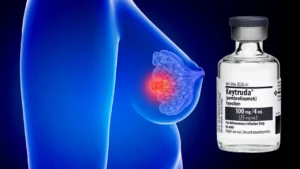
Keytruda is an intravenous (IV) infusion medication classified as an immune checkpoint inhibitor. It specifically targets the programmed death-1 (PD-1) pathway, a key mechanism cancers use to evade immune detection. Available as a 100 mg/4 mL single-dose vial, it is formulated with L-histidine, polysorbate 80, sucrose, and water for injection.
- Keytruda Qlex: A subcutaneous (SC) formulation approved in September 2025, combining pembrolizumab with berahyaluronidase alfa-pmph for faster administration (1-2 minutes vs. 30 minutes for IV). It matches IV efficacy and is approved for adults and pediatrics (≥12 years) in most solid tumor indications.
- Biomarker-Driven Use: Often requires PD-L1 expression (TPS ≥1% or CPS ≥1), microsatellite instability-high (MSI-H), mismatch repair deficient (dMMR), or tumor mutational burden-high (TMB-H) for optimal response.
Keytruda’s broad applicability stems from its role in reactivating exhausted T-cells, applicable to tumors with high mutational burdens that generate neo-antigens.
History of Keytruda
Pembrolizumab’s development began in the early 2000s at Organon, focusing on PD-1 blockade after discoveries by Tasuku Honjo (Nobel Prize 2018). Merck acquired it in 2009 and launched Phase 1 trials in 2011.
- Milestones:
- 2014: FDA accelerated approval for ipilimumab-refractory melanoma (ORR 26%).
- 2015: Expanded to NSCLC based on KEYNOTE-001 (ORR 19-25% in PD-L1+ tumors).
- 2017: Full approval for frontline melanoma; surpassed ipilimumab in KEYNOTE-006 (5-year OS 38% vs. 23%).
- 2019-2023: Approvals in HNSCC, urothelial, MSI-H/dMMR tumors, and more; became top-selling cancer drug.
- 2025 Updates: March—traditional approval for HER2+ gastric/GEJ with chemo (KEYNOTE-811); June—neoadjuvant/adjuvant for HNSCC; September—Keytruda Qlex SC formulation; November—neoadjuvant/adjuvant with enfortumab vedotin for cisplatin-ineligible MIBC; December—perioperative with Padcev for MIBC.
Global approvals followed, with EMA in 2015 and inclusion in NHS Cancer Drugs Fund (2022). By 2025, over 1,600 trials explore combinations.
Mechanism of Action
Keytruda binds to PD-1 on activated T-cells, preventing engagement with PD-L1/PD-L2 on tumor cells or antigen-presenting cells. This inhibits negative signaling, promoting T-cell proliferation, cytokine production, and tumor cell lysis.
- Entourage Effect: Enhances anti-tumor immunity via neo-antigen recognition; tumors with high mutation burdens (e.g., smokers’ NSCLC) respond best.
- Pharmacokinetics: Half-life ~23 days; steady-state after 16 weeks. SC Qlex achieves comparable exposure (AUC0-6 weeks ratio >0.8).
- No Significant Interactions: Minimal CYP involvement; monitor with BCRP substrates if combined.
This “brake release” on immunity differentiates it from chemotherapies, enabling durable responses.
Clinical Trials and Efficacy
Keytruda’s evidence spans 1,600+ trials, with pivotal KEYNOTE studies:
- KEYNOTE-006 (Melanoma): Superior to ipilimumab; 5-year OS 38% vs. 23%.
- KEYNOTE-024/042 (NSCLC): Monotherapy vs. chemo; 8-10 year OS 25-31% vs. 16-19% in PD-L1+.
- KEYNOTE-671 (NSCLC): Perioperative with chemo; 5-year EFS/OS improvements (HR 0.58/0.71).
- KEYNOTE-811 (Gastric): With trastuzumab/chemo; ORR 72% (March 2025 full approval).
- EV-303/KEYNOTE-905 (Bladder, 2025): With Padcev perioperative; 60% EFS reduction, 50% OS reduction vs. surgery (HR 0.40/0.50).
- KEYNOTE-689 (HNSCC, 2025): Perioperative; significant EFS improvement vs. SOC.
- KEYNOTE-B96 (Ovarian, 2025): With paclitaxel ± bevacizumab; PFS/OS benefits in PD-L1+ (first ICI success in platinum-resistant).
Responses often durable; median time to response 2-4 months. PD-L1 ≥50% predicts better PFS (6.3 months).
Dosing and Administration
- Standard IV: 200 mg or 2 mg/kg every 3 weeks; 400 mg every 6 weeks; up to 2 years or until progression/toxicity.
- Qlex SC: 400 mg every 6 weeks (preferred for convenience).
- Duration: Continue until unacceptable toxicity, progression, or 2 years (adjuvant).
- Preparation: Dilute in 50-100 mL NS; infuse over 30 min. SC: Room temp, inject in thigh/abdomen/arm.
Adjust for renal/hepatic impairment unnecessary; pediatrics weight-based.
Benefits and Risks
Benefits:
- Durable responses: 20-50% ORR across tumors; long-term survival (e.g., 10-year OS in NSCLC).
- Versatile: Monotherapy or combo; perioperative to reduce recurrence.
- Quality of Life: Fewer chemo side effects; first tissue-agnostic approval.
Risks and Side Effects:
- Immune-Mediated (irAEs): Occur in 10-20%; include pneumonitis (3-5%), colitis (1-2%), hepatitis, endocrinopathies (thyroid 10-15%), dermatitis. Severe/fatal in <1%; manage with steroids.
- Infusion/SC Reactions: Chills, rash (rare anaphylaxis).
- Other: Fatigue (20-30%), pruritus, diarrhea, arthralgia. Combo increases myelosuppression, neuropathy.
- Black Box: Immune-mediated reactions; fetal harm (contraception 4 months post); transplant rejection.
- Monitoring: Baseline thyroid/liver/kidney; monthly labs; withhold for Grade 2+ irAEs.
Pregnancy Category D; avoid breastfeeding.
Market Impact and Access
Priced at ~$150,000/year initially, Keytruda’s 2024 sales hit $29.5B. Patient assistance via Merck; prior auth common. Biosimilars emerging, but patent extends to 2028+.
Latest Developments (as of December 2025)
- EV-303/KEYNOTE-905: Padcev + Keytruda perioperative for MIBC; FDA approval Dec 2025—first ADC/PD-1 combo, redefining SOC.
- KEYNOTE-B96: PFS/OS gains in platinum-resistant ovarian (ESMO 2025).
- Long-Term NSCLC Data: 5-10 year benefits in KEYNOTE-024/042/671 (ESMO 2025).
- KEYNOTE-689: EFS improvement in LA-HNSCC perioperative (AACR 2025).
- Ongoing: EV-304 (cisplatin-eligible MIBC); combos with ADCs/ICIs.
Keytruda exemplifies immunotherapy’s paradigm shift, offering hope across oncology. Early biomarker testing and multidisciplinary management optimize outcomes. Consult oncologists for personalized plans; evolving data underscore its enduring role.
More articles by InnovateIQ Researche:
https://www.zionmarketresearch.com/de/report/smart-wearable-fitness-and-sports-devices-market
https://www.zionmarketresearch.com/de/report/bleached-linter-cellulose-market
https://www.zionmarketresearch.com/de/report/action-camera-market
https://www.zionmarketresearch.com/de/report/beverage-essence-ingredient-market
https://www.zionmarketresearch.com/de/report/respiratory-syncytial-virus-vaccine-market