Respiratory Syncytial Virus Vaccine: A Comprehensive Guide
Respiratory Syncytial Virus (RSV) vaccines represent a major breakthrough in preventing severe lower respiratory tract disease caused by RSV, a common virus that leads to mild cold-like symptoms in most people but can cause serious illness in infants, young children, and older adults. After decades of research challenges, the first RSV vaccines were approved in 2023, with additional options emerging by 2025. These include vaccines for older adults, a maternal vaccine for pregnant individuals, and monoclonal antibodies for infants. As of December 2025, RSV remains a leading cause of hospitalization in infants and older adults, but immunization tools have significantly reduced severe outcomes.
What Is Respiratory Syncytial Virus (RSV)?
RSV is a highly contagious single-stranded RNA virus from the Pneumoviridae family, discovered in 1956. It spreads through respiratory droplets and surfaces, causing annual outbreaks typically from fall to spring.
- Symptoms: Mild in healthy adults/children (runny nose, cough, fever); severe in vulnerable groups (bronchiolitis, pneumonia).
- Impact: Leading cause of infant hospitalization in the U.S.; causes 100,000–160,000 hospitalizations and up to 10,000 deaths annually in older adults.
History of RSV Vaccine Development
RSV vaccine research began in the 1960s but faced setbacks—a formalin-inactivated vaccine worsened disease in children upon natural infection. Advances in understanding the prefusion F protein (key for viral entry) enabled modern vaccines.
- Milestones: First approvals in 2023 (Arexvy, Abrysvo); mResvia (mRNA) in 2024; expanded indications and new monoclonal antibodies by 2025.
- Challenges Overcome: Stabilizing the prefusion F antigen for effective immune response without enhancing disease.
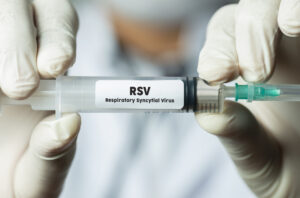
Types of RSV Immunizations
Two main categories:
- Vaccines (active immunization): Stimulate antibody production.
- For older adults: Arexvy (GSK, adjuvanted protein), Abrysvo (Pfizer, protein), mResvia (Moderna, mRNA).
- Maternal: Abrysvo (given during pregnancy to pass antibodies to infant).
- Monoclonal Antibodies (passive immunization): Direct antibody injection for infants.
- Nirsevimab (Beyfortus, Sanofi/AstraZeneca).
- Clesrovimab (Enflonsia, Merck—approved 2025).
RSV Vaccines for Older Adults
Three FDA-approved vaccines target the prefusion F protein:
- Arexvy (GSK): Adjuvanted recombinant protein; first approved 2023.
- Abrysvo (Pfizer): Unadjuvanted protein.
- mResvia (Moderna): mRNA-based; approved 2024, expanded to at-risk 18-59 in 2025.
Recommendations (CDC, as of 2025):
- All adults ≥75 years: Single dose.
- Adults 60-74 at increased risk (e.g., chronic lung/heart disease, nursing homes): Shared decision-making.
- At-risk 50-59 (some brands): Eligible.
- No routine recommendation yet for 18-49 at risk.
Efficacy: ~80-90% against severe LRTD; waning over time, potential boosters discussed.
Protection for Infants and Young Children
No direct infant vaccine; instead:
- Maternal Vaccination: Abrysvo (32-36 weeks pregnancy) passes antibodies transplacentally, protecting newborn ~6 months.
- Monoclonal Antibodies: Nirsevimab or clesrovimab injection for infants <8 months entering first RSV season; nirsevimab also for high-risk 8-19 months.
One or the other recommended (not both for most); coverage ~56% in recent seasons.
Effectiveness and Benefits
- Older Adults: Reduce hospitalization by 70-90%; prevent thousands of severe cases.
- Infants: Maternal vaccine/monoclonal antibodies: 70-80% effective against hospitalization.
- Benefits: Fewer hospitalizations, deaths; safer than infection risk.
Side Effects and Risks
Common: Injection site pain, fatigue, headache.
Rare: Guillain-Barré syndrome (slight increase, ~1-18 excess cases/million doses in older adults); monitored ongoing.
No confirmed preterm birth link with proper timing.
Latest Developments (as of December 2025)
- New monoclonal: Clesrovimab approved.
- Expanded approvals: mResvia for younger at-risk adults.
- Global: WHO prequalified maternal vaccine (2025).
- Ongoing: Booster studies, combination vaccines; safety reviews amid policy changes.
RSV immunizations mark a turning point in preventing severe disease. Consult providers for personalized recommendations; uptake remains key to maximizing impact. Always verify current guidelines, as recommendations evolve.
More articles by InnovateIQ Researche:
https://www.zionmarketresearch.com/de/report/vessel-monitoring-system-software-market
https://www.zionmarketresearch.com/de/report/packaging-market
https://www.zionmarketresearch.com/de/report/omega-3-ingredients-market
https://www.zionmarketresearch.com/de/report/lignin-waste-market
https://www.zionmarketresearch.com/de/report/luo-han-guo-market